


Starting Your Duck Egg Journey Without The Overwhelm
Let’s be honest: the thought of raising ducks for eggs can feel a bit much at first. You’re hit with a wave of conflicting advice, scary setup costs, and the nagging fear of getting it wrong. Many people starting out get stuck on the initial details, imagining fancy ponds and custom-built coops. But the secret from seasoned keepers is to focus on what really counts in those first few months. The trick is to start with realistic expectations and a clear picture of the journey from a fluffy duckling to that first delicious egg.
The Real Investment: Time, Space, and Money
Before you get lost admiring different duck breeds, it’s crucial to take a realistic look at your resources. The timeline from bringing home your ducklings to that first egg collection is usually about five to seven months. This isn’t just a waiting game; it demands your consistent time and effort. The initial outlay isn’t just for the birds themselves, but also for a brooder, a heat source, specialised duckling feed, and a secure coop. It’s the hidden costs, like a surprise need for niacin supplements or a better waterer, that often catch newcomers by surprise.
When it comes to space, you don’t need a massive farm. A small flock of three to five ducks can do just fine with a secure night shelter of around 1.5 square metres and a daytime run of at least 10 square metres. Of course, more space is always a bonus, as it helps cut down on stress and lets them enjoy foraging. It’s also wise to check your local council’s rules; some areas have specific regulations about keeping poultry, and sorting this out early saves a lot of headaches later on.
Preparing for Success: Essentials vs. Extras
One of the biggest tripwires for beginners is telling the difference between what you truly need and what’s just a “nice-to-have” extra. A predator-proof shelter and a constant supply of clean water deep enough for them to dunk their heads are non-negotiable. That fancy, self-cleaning pond you’ve seen online? That’s an extra. A simple children’s paddling pool does the job perfectly well and is much kinder to your wallet.
This practical approach to raising ducks for eggs is becoming more common in UK poultry keeping, with backyard systems growing in popularity. For example, recent figures show a clear consumer move towards free-range eggs, which now make up nearly 60% of total production, while older cage systems have fallen out of favour. You can see how these trends are shaping farming in England in the full poultry production report. Adopting this practical mindset will help you get started strong without spending a fortune. For those thinking of starting from scratch, you might also find our guide on how to hatch duck eggs at home useful.
Picking Duck Breeds That Actually Lay Consistently
Choosing your first ducks is an exciting step, but it’s easy to get sidetracked by pretty feathers and end up with birds that are more ornamental than productive. If your goal is a steady supply of rich, delicious eggs, you need to focus on breeds known for their laying prowess. When raising ducks for eggs, performance is key, and the best layers aren’t always the most common breeds you see.
Top Performers for Your Egg Basket
If you’re serious about getting a full egg basket, a few specific breeds consistently outperform the others. The Khaki Campbell is often called the “Leghorn of the duck world,” and for good reason. These are energetic, lightweight birds that can lay an incredible 300+ eggs per year when they’re well cared for. They are fantastic foragers and, while they can be a bit skittish, they are an amazing choice for a dedicated egg-laying flock.
Another brilliant layer is the Indian Runner. Famous for their unique, upright posture that makes them look like walking wine bottles, these ducks are as productive as they are entertaining. They’re reliable layers throughout the year and often lay beautiful blue-green eggs. If you’re drawn to their quirky personalities and want a flock that will keep the nesting boxes full, our friends at HatchingEggs.eu have an excellent guide on Indian Runner duck care that’s worth a read.
Finally, don’t overlook the Welsh Harlequin. This is a fantastic dual-purpose breed, offering a calm and friendly temperament alongside very respectable egg numbers. They are beautiful birds, and the hens are known for being excellent mothers, which is a huge plus if you ever decide to hatch your own ducklings.
To help you compare these excellent layers, here’s a table outlining what you can expect from each.
| Breed | Annual Eggs | Egg Weight (g) | Laying Season | Temperament | Climate Suitability |
|---|---|---|---|---|---|
| Khaki Campbell | 280-320 | 70-80 | Year-round | Energetic, flighty | Excellent in cold/wet |
| Indian Runner | 250-300 | 65-75 | Year-round | Active, quirky | Very hardy |
| Welsh Harlequin | 240-300 | 70-80 | Year-round | Calm, friendly | Excellent in cold/wet |
| Pekin | 150-220 | 80-95 | Seasonal | Calm, friendly | Very hardy |
| Magpie | 220-290 | 65-80 | Year-round | Active, curious | Very hardy |
As you can see, while breeds like the Pekin lay larger eggs, their annual numbers don’t quite match up to the production-focused breeds. The Khaki Campbell remains a top choice for sheer volume.
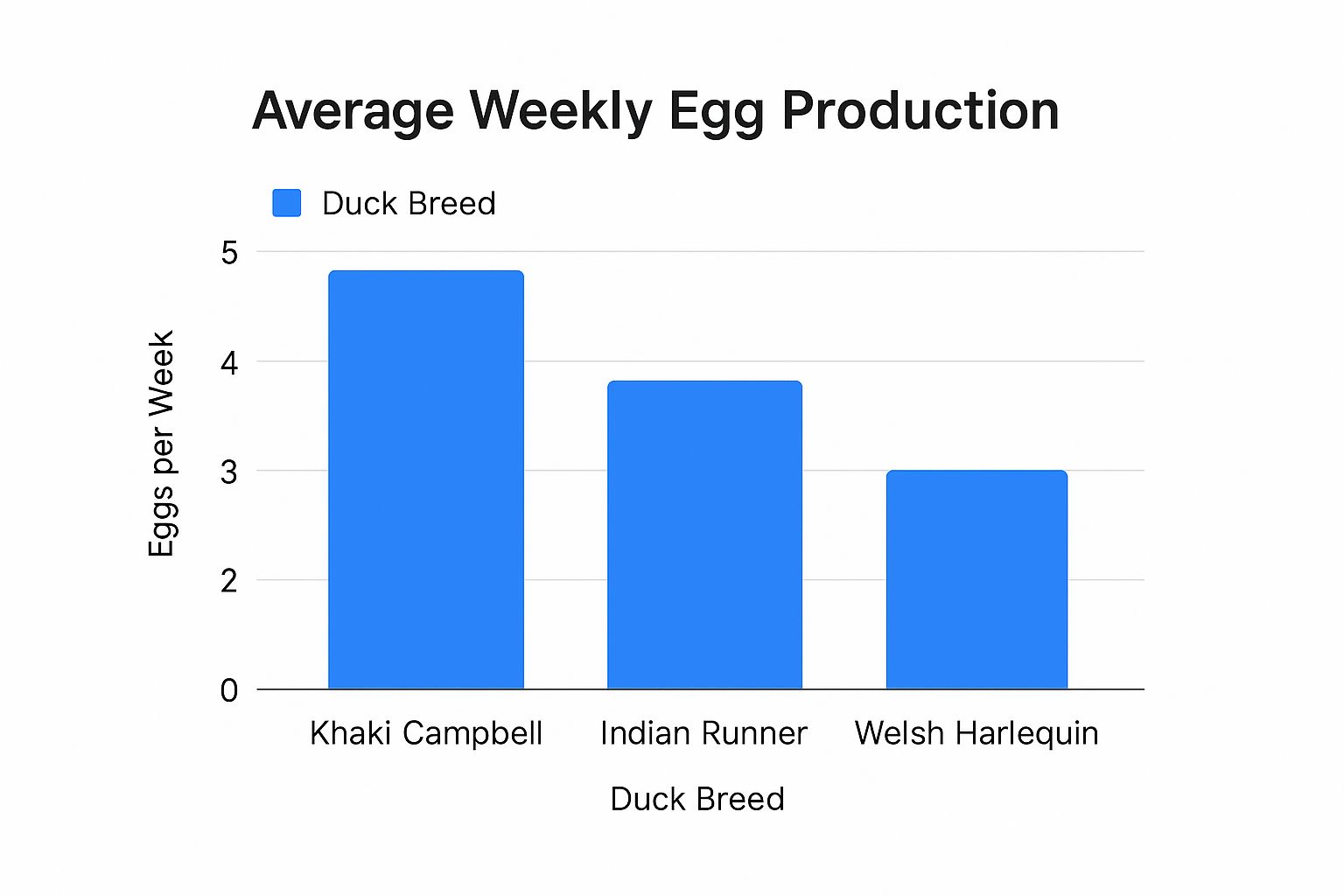
The infographic above gives you a clear visual of how these top breeds stack up on a weekly basis, showing why the Khaki Campbell is so popular for egg production.
Factors Beyond Egg Count
While egg numbers are important, they aren’t the only piece of the puzzle. You need to find a breed that fits your property, your climate, and your lifestyle.
- Temperament and Noise: Think about your neighbours. Some breeds, like the tiny Call duck, are incredibly loud and might cause friction. On the other hand, Muscovy ducks are famously quiet. Consider your living situation and whether a noisy flock will be a problem.
- Foraging Ability: Breeds like Runners and Campbells are brilliant foragers. If you have space for them to roam, they can significantly reduce your feed bill by dining on slugs, snails, and weeds. A huge bonus is that they do this without scratching up your garden beds like chickens do.
- Climate Hardiness: Most duck breeds are exceptionally tough and handle cold, wet weather much better than chickens. Their waterproof feathers and fatty layer mean they rarely get frostbite and will happily splash in puddles even on a snowy day. The main thing is to provide a dry, draught-free shelter where they can retreat from the worst of the weather. This is crucial for keeping them healthy and laying through the winter.
Housing Solutions That Work In Real Backyards
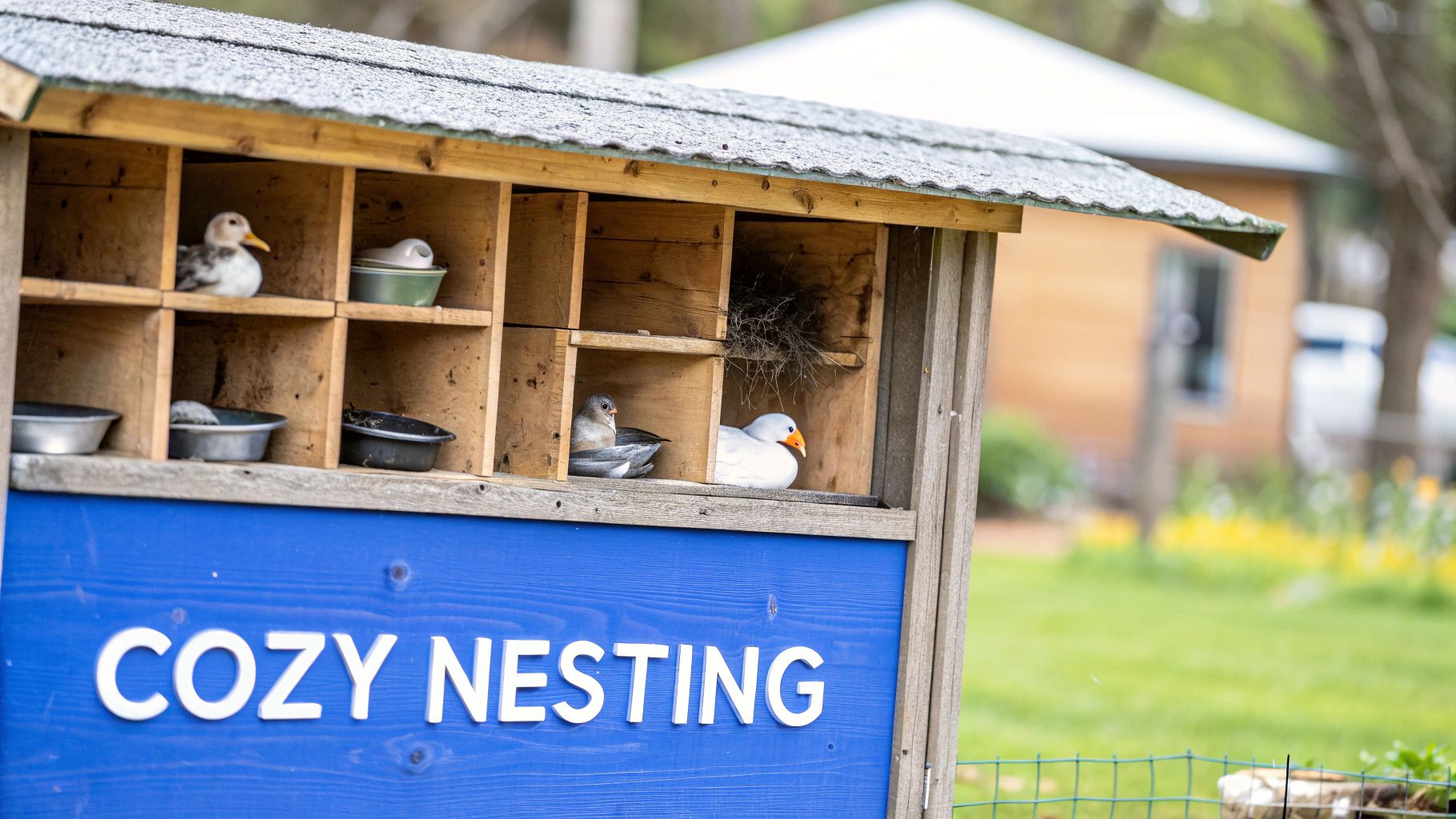
Let’s talk about housing that genuinely works when you are raising ducks for eggs. It’s easy to get sidetracked by those picture-perfect duck palaces you see online, but in the real world, function should always come before fancy aesthetics. The best shelter is one that keeps your ducks safe, healthy, and laying regularly, without turning into a major chore for you. Many seasoned keepers find that a converted garden shed or a reinforced children’s playhouse works far better—and is much more affordable—than a bespoke coop. The secret is to concentrate on the features that truly matter.
This practical mindset for backyard duck keepers is a world away from large-scale commercial farming. Historically, UK duck farming has been almost entirely focused on meat. For example, back in 2004, the UK processed around 18 million ducks, a huge jump from 11 million in 1992. A massive 95% of these were raised in intensive systems, with very few being free-range. You can explore more on these industry practices and their history. For those of us keeping ducks in our gardens, the priorities are welfare and a steady supply of delicious eggs.
Non-Negotiable Coop Features
To keep your ducks healthy and productive, their house must have a few essential features. These directly affect egg production by warding off stress and illness, which are the biggest enemies of a good laying routine.
- Excellent Ventilation: Ducks produce a surprising amount of moisture just by breathing. Without good airflow, particularly high up in the coop, ammonia and dampness build up fast. This can cause serious respiratory infections and even frostbite in winter. A sick duck is a non-laying duck, so install vents that let stale, moist air out without creating a direct draught on your flock.
- Deep, Dry Bedding: Ducks sleep right on the floor, so a thick, absorbent layer of bedding like straw or pine shavings is a must. This isn’t just for comfort; it’s crucial for managing moisture and droppings. The deep litter method is a great technique where you add fresh bedding over the old. This creates a composting base that generates a bit of natural warmth and keeps the coop healthier.
- Solid Predator-Proofing: You have to assume that foxes, badgers, and even persistent rats will view your ducks as an easy meal. This means using strong hardware mesh (chicken wire is not enough) over any openings, fitting secure latches on doors, and ensuring there are absolutely no gaps in the floor or walls.
Smart Design for Easy Management
A thoughtfully designed coop makes your daily routine much smoother. For instance, placing nesting boxes on the floor in a quiet, dark corner encourages your ducks to lay where you can easily find the eggs. They aren’t picky; a simple partitioned area filled with clean straw is perfect.
Water management is another big one. Keeping waterers outside the coop is the single best thing you can do to stop the inside from becoming a soggy, smelly disaster. In their run, a great tip is to place a water bucket or paddling pool on a wire-covered frame that sits over a gravel-filled pit. This allows all the splashes and spills to drain away, preventing the surrounding area from turning into a mud bath. It’s these small design choices that make raising ducks for eggs a pleasure instead of a constant fight against mess.
Feeding Strategies That Maximize Egg Production
Your feed bill will almost certainly be the biggest ongoing expense when raising ducks for eggs, so making every penny count towards a full nesting box is vital. A laying duck isn’t just eating for herself; she’s turning food into a large, nutrient-rich egg nearly every day. This process demands a specific nutritional balance, particularly with protein and calcium. Mastering this is the real secret to getting consistent, top-quality eggs.
Imagine your duck’s body as a little egg factory. If the right raw materials aren’t delivered, the production line simply stops. The most crucial raw material is protein. Laying ducks need a feed with 16-18% protein to support steady egg production while also maintaining their own health. Offering anything less will quickly lead to a noticeable drop in laying. Just as vital is constant access to clean water, which ducks use to swallow their food and for overall well-being.
The Critical Role of Calcium and Niacin
While protein provides the fuel, calcium builds the eggshell. A calcium deficiency is the top reason for thin, rubbery, or even shell-less eggs. This is why you must provide a separate, free-choice supply of crushed oyster shell. Don’t mix it into their main feed; ducks are incredibly good at self-regulating and will take exactly what their body needs, right when it needs it. This one simple step can resolve most shell quality problems surprisingly quickly.
Another key nutrient, especially for young, growing ducklings, is niacin (Vitamin B3). Ducklings grow at a remarkable rate and have higher niacin needs than chicks. Without enough of it, they can develop serious leg problems that will affect them for their entire lives. While most high-quality waterfowl starter feeds have sufficient niacin, you can also supplement their diet with a little brewer’s yeast sprinkled over their feed. This ensures strong bone development and sets them up for a long, productive future.
To help you get the nutrition right at every stage, here’s a breakdown of what your ducks need and when.
Duck Feeding Guide by Life Stage
Comprehensive nutritional requirements and feeding recommendations for ducks from hatching through peak egg production
| Life Stage | Age Range | Protein % | Daily Feed (g) | Key Nutrients | Special Considerations |
|---|---|---|---|---|---|
| Duckling | 0–3 Weeks | 20–22% | Free-choice | High Niacin, Protein | Always use waterfowl starter, not chick starter, unless you add a niacin supplement. |
| Grower | 3–20 Weeks | 16–18% | 150–200g | Balanced Protein | Transition to lower protein to prevent overly fast, unhealthy growth. |
| Layer | 20+ Weeks | 16–18% | 170–220g | Calcium, Protein | Offer crushed oyster shell free-choice and ensure constant access to fresh water. |
| Non-Laying | Moulting/Winter | 14–16% | 150–180g | Lower Protein | Reduce feed to maintenance levels to conserve costs during off-seasons. |
This table shows the clear shifts in dietary needs as your ducks grow. Paying attention to these changes ensures they remain healthy and productive.
Smart Supplementation and Treats
A quality commercial layer pellet should always be the foundation of their diet, but clever supplementation can boost their health and egg output. Foraging is a duck’s favourite pastime and a fantastic way for them to add insects, slugs, and greens to their diet, which also helps lower your feed bill.
Treats should be given in moderation, much like a dessert rather than a main meal. Healthy choices include things like floating peas, torn leafy greens, and mealworms. Try to avoid “junk food” treats like bread, which provide very little nutritional value and can dilute the effectiveness of their carefully balanced feed. Good nutrition is also fundamental to breeding; for those looking to hatch their own flock, knowing the ideal duck egg incubation temperature is just as important as providing a proper diet.
Keeping Your Flock Healthy And Laying Strong
A healthy flock is a productive flock; there’s really no simpler way to put it. When you’re raising ducks for eggs, the best approach is to prevent illness rather than just treating it. Often, the first sign something is wrong is a sudden drop in egg numbers, but by that point, the issue may have already taken hold. Focusing on prevention doesn’t require a complicated setup, just consistent, good habits that create a low-stress and clean environment for your birds.
The most important tool you have for keeping your flock healthy is your own observation. Make a habit of spending time with your ducks every day, especially during their morning and evening routines. This is more than just a pleasant chore; it’s your frontline diagnostic. You’ll quickly get a feel for their normal energy levels, appetite, the appearance of their droppings, and the clarity of their eyes. A duck that seems sluggish, has messy feathers, or keeps to itself is sending a clear signal that something isn’t right. Catching these subtle clues early is the key to stopping a problem before it affects the whole flock.
Common Issues That Stop Egg Production
When a duck suddenly stops laying, it’s often because an underlying health problem is diverting her energy from making eggs to just staying alive. Knowing the usual suspects helps you spot trouble faster.
- Internal Parasites: Worms are a frequent problem for any poultry. They silently steal essential nutrients, leading to weight loss, tiredness, and a complete stop in egg production. A good deworming schedule, especially if your ducks forage over a large area, can make a world of difference.
- Respiratory Infections: As we’ve touched on, damp and stuffy coops are a breeding ground for nasty respiratory bugs. Keep an eye out for coughing, sneezing, or any discharge from their eyes or nostrils. A sick duck is a stressed duck, and she won’t be laying any eggs. A dry, well-ventilated shelter is non-negotiable.
- Bumblefoot: This is a bacterial infection in the footpad, usually starting from a small cut. It causes a painful, swollen abscess that makes walking difficult. If a duck is in pain, her body will focus on healing, not laying. Checking their feet regularly can help you catch this early. For those considering hatching their own flock, it’s useful to understand health from day one; you might find our guide on the ideal duck incubation period useful for a healthy start.
Building Your Health Toolkit
Over time, you’ll get better at knowing when to intervene yourself and when it’s time to call a professional. It’s a great idea to find a vet with experience in avian care before you actually need one. Put together a simple first-aid kit with essentials like antiseptic spray, wound care supplies, and electrolytes. It’s also surprisingly helpful to keep records of egg numbers and any behavioural changes to spot trends.
Finally, if you ever add new birds to your flock, a strict quarantine period of at least 30 days is your absolute best defence. This simple practice prevents new diseases from being introduced to your established, healthy ducks.
Getting The Most From Every Egg Your Ducks Lay
Collecting eggs seems straightforward, but you’ll quickly learn that timing, handling, and storage are key to the quality and safety of your haul. Ducks, unlike chickens, have a very dependable laying schedule. They almost always lay their eggs in the quiet hours of the early morning, typically before the sun is even up. This predictable habit is a massive plus when you’re raising ducks for eggs because it makes collection simple. A quick morning check of the nesting boxes is all it takes – no more afternoon egg hunts!
Collection, Cleaning, and Storage
Once you’ve gathered your eggs, handling them correctly is the next crucial step. Duck eggs are coated in a protective, waxy film known as the bloom, or cuticle. This invisible shield seals the shell’s tiny pores, which keeps bacteria out and moisture in, helping them stay fresh for much longer.
Because of this natural protection, it’s always best to avoid washing eggs unless they’re really caked in mud or muck. If an egg just has a bit of straw stuck to it, a gentle brush-off is all it needs. If a proper clean is unavoidable, use warm water—a little warmer than the egg itself—and a soft cloth, then dry it straight away. Never use cold water, as this can create a vacuum effect, pulling bacteria straight through the shell.
How you store your eggs makes a huge difference:
- Unwashed eggs: These can be kept at a cool room temperature (around 13-18°C) for several weeks without any trouble.
- Washed eggs: Because their protective bloom is gone, they must be refrigerated immediately and are best used within a few weeks.
- Pointy end down: Always store your eggs with the pointy end facing down. This keeps the air sac at the blunt end stable, helping the yolk stay centred and preserving freshness.
Troubleshooting and Record-Keeping
Even the most seasoned duck keeper runs into problems now and then. Thin or soft shells are a common complaint, and it usually signals a calcium deficiency. The simplest solution is to offer a constant, free-choice supply of crushed oyster shell in a separate dish from their main feed. Irregular laying can also be a headache. Keeping a simple daily tally of how many eggs you collect helps you notice patterns. Is one duck a reliable layer while another isn’t pulling her weight? This information is gold for identifying your star performers and spotting potential health concerns early.
This kind of careful monitoring is just a smaller version of what happens in big commercial operations. To give you some perspective, commercial poultry hatcheries in the UK set around 9 million eggs for commercial layers in February 2024 alone, a major jump in production. You can discover more about UK poultry statistics and trends on the official government website. While your backyard setup is obviously different, tracking your flock’s performance ensures your efforts are rewarded with an abundance of delicious, top-quality duck eggs.
Solving Problems and Building Long-Term Success
Even with the best preparation, keeping ducks will always throw a few surprises your way. Knowing how to handle these common hiccups and think about the future is what separates a short-lived hobby from a rewarding, long-term venture. It’s all about creating a setup that works for both your flock and you.
Navigating Production and Behavioural Hurdles
One of the most common worries I hear is about a sudden drop in egg production. Before you panic, run through a mental checklist of the usual suspects. Is one of your ducks moulting? Has there been a sudden predator scare or a big change to their feed? These sorts of stresses can easily put a temporary stop to laying. It’s also worth remembering that a duck’s egg-laying prime is typically in her first two or three years, after which production will naturally slow down.
Tricky behaviours can also upset the balance of a peaceful flock. An overly boisterous drake, for example, can cause stress for the hens, which in turn affects their laying. Sometimes, just separating the pushy individual for a day or two is enough to reset the pecking order. If you’re looking to keep your flock going by raising your own replacements, understanding incubation is a game-changer. An automatic egg incubator can be a brilliant tool for helping you maintain a steady supply of new layers by hatching your own ducklings.
Planning for a Sustainable Future
Real long-term success means looking beyond this season’s egg basket. A key part of this is having a replacement plan for your flock. As your older ducks gracefully retire from their laying duties, you’ll want younger birds ready to step up to keep production consistent. This is the point where you decide whether to buy in new ducklings or hatch your own.
Thinking about the size of your operation is another important consideration.
- Expanding: If you’re selling out of eggs every week or just fancy trying a new breed, it’s best to expand slowly. Adding just a couple of new birds at a time stops you from overwhelming your space and resources.
- Scaling Back: Life happens! If your circumstances change, there’s absolutely no shame in reducing your flock size. Sometimes, focusing on a smaller, more manageable group of ducks is what keeps the hobby fun instead of feeling like a chore.
Don’t underestimate the value of connecting with local poultry clubs or online forums. Sharing your own stories and getting advice from other keepers is a fantastic way to get through tough patches and celebrate the wins. Taking a moment now and then to review your goals helps ensure that your duck-keeping adventure continues to bring you joy and, of course, plenty of delicious eggs.
At HatchingEggs.eu, we’re passionate about supporting keepers for the long haul. From providing high-quality hatching eggs to sharing our expert knowledge, we’re here for every step of your journey. Explore our selection of premium hatching eggs today and start building the productive, happy flock you’ve been dreaming of.