


So, you’re thinking about keeping chickens. It’s a fantastic journey, one that can put fresh food on your table and connect you to where it comes from. But before you rush out to buy your first birds, there’s a big question you need to answer: are you in it for the eggs or for the meat?
This decision is the cornerstone of your entire setup. Choosing between layers (for eggs) and broilers (for meat) will steer everything from the breed you pick to the feed you buy.
Your First Steps in Poultry Farming
Think of it like starting a garden. Are you planting a fruit tree that will give you a steady harvest for years to come? That’s your laying flock. Or are you planting quick-growing vegetables, like courgettes, for a single, satisfying harvest in a couple of months? That’s the path of raising broiler chickens.
Your answer sets the scene for your budget, your daily chores, and the timeline of your project. Neither one is better than the other, but one will definitely suit your lifestyle and goals more closely.
Deciding Between Eggs and Meat
Raising layers is a long-term relationship. These hens can live for several years, reliably providing you with fresh eggs for most of that time. Your days will involve collecting those beautiful eggs, making sure they have food and clean water, and keeping their coop tidy and safe from predators. The initial investment is a bit higher because you’ll need a sturdy coop with proper nesting boxes, but the running costs are spread out over time.
Raising broilers, on the other hand, is a short-term project. It’s an intense sprint that usually lasts just 8-16 weeks from chick to freezer. The entire focus is on rapid, healthy growth, which means you’ll need a specialised, high-protein feed. The time commitment is condensed but brings the immense satisfaction of producing your own high-quality meat.
To give you a sense of scale, the UK poultry industry operates on two very different models. Recent figures show a staggering 90.3 million broiler chicks were placed for meat production, dwarfing the 3 million commercial layer chicks destined for egg-laying. This highlights just how distinct these two paths are, even at a commercial level. You can see more UK poultry industry statistics to get a feel for the bigger picture.
To help you figure out which path is right for you, let’s break it down.
Quick Guide: Broilers vs. Layers for Beginners
| Consideration | Broiler Chickens (For Meat) | Layer Hens (For Eggs) |
|---|---|---|
| Primary Purpose | Raising for meat. | Raising for a consistent supply of eggs. |
| Time Commitment | Short-term project (8-16 weeks). | Long-term commitment (several years). |
| Feed Type | High-protein “grower” feed for fast growth. | Balanced “layer” feed with extra calcium. |
| Housing Needs | Simple, secure shelter for a short period. | A durable coop with nesting boxes and perches. |
| Daily Chores | Frequent feeding, watering, and cleaning. | Daily egg collection, feeding, watering, coop upkeep. |
| End Result | A freezer full of homegrown chicken. | A steady supply of fresh eggs almost daily. |
Ultimately, choosing between broilers and layers comes down to what you want to get out of keeping chickens. Do you want the satisfaction of a short, productive project or the daily reward of collecting your own breakfast?
Are You Ready to Start?
Before you bring home a box of chirping chicks, it pays to do a quick self-check to make sure you’re truly prepared. This simple chart can help you see if you’ve got the essentials covered.
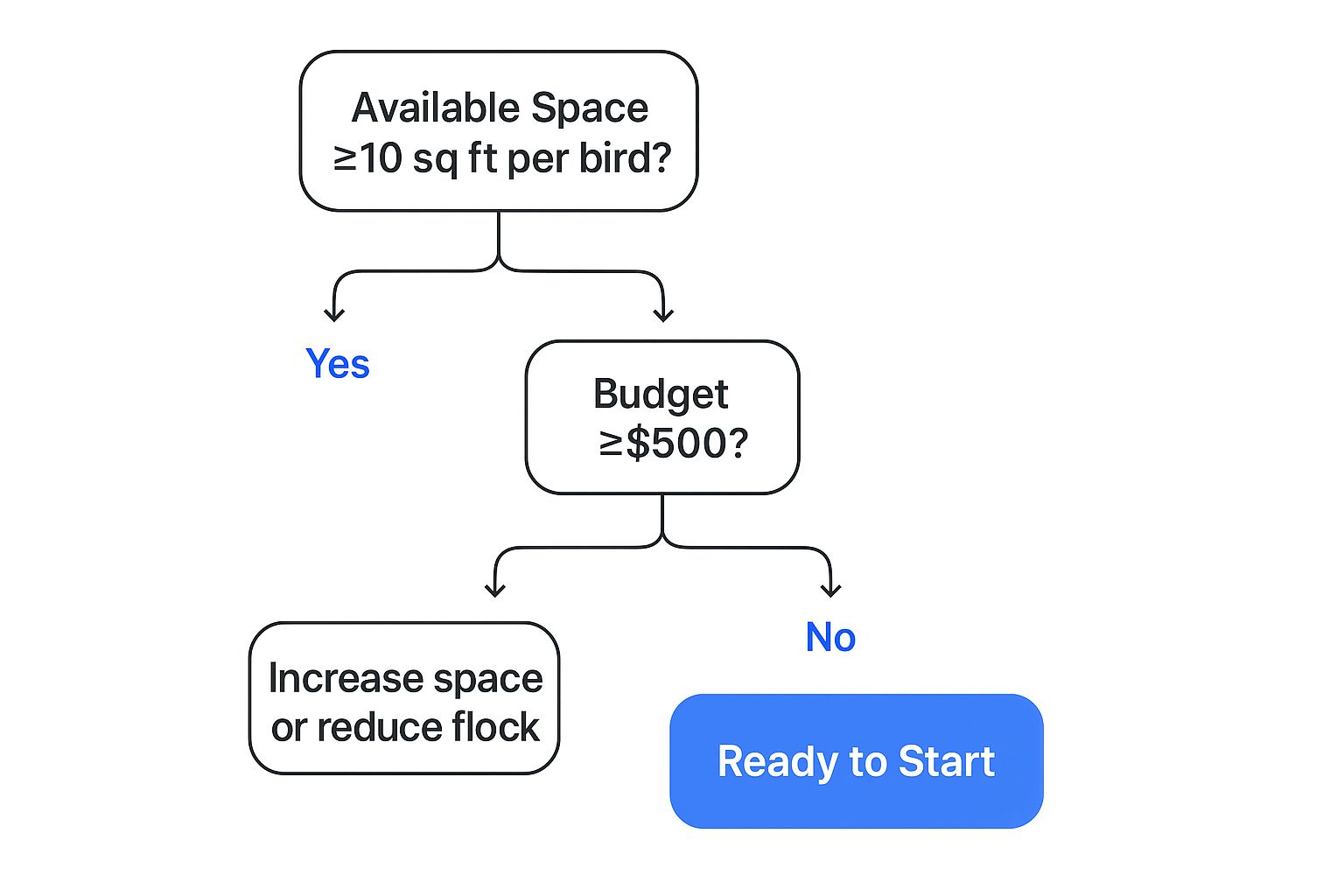
The main takeaway here is simple: having enough space and a realistic budget from the get-go is key. If you’re short on either, it’s always better to start small or take the time to get your setup right first. For those just starting their research, our poultry farming blog is packed with tips and information to help you on your way.
Alright, you’ve decided whether you’re in it for the eggs, the meat, or a bit of both. Now comes the really fun part: picking your chickens.
Choosing your first flock is a bit like putting together a team. Each breed has its own quirks, talents, and ability to thrive in the often damp and unpredictable UK weather. Getting this right from the start is the secret to a happy, healthy, and productive flock.
Some chickens are specialists, fine-tuned over generations for one job. Others are fantastic all-rounders. Your final decision will hinge on your goals, how much space you have, and the time you can dedicate to your new feathered friends. Let’s look at a few solid choices for anyone starting out in the UK.
The All-Rounders: Dual-Purpose Breeds
For most people dipping their toes into poultry keeping, dual-purpose breeds are the perfect starting point. These birds give you the best of both worlds: a reliable supply of eggs and a good-sized table bird when the time comes.
The classic Sussex is a brilliant example. They’re famously calm and friendly, making them a wonderful choice for families with children. Better yet, they are exceptionally hardy birds that handle the British climate with ease, happily scratching around your garden in all but the foulest weather. A happy Sussex hen will reward you with around 200-250 lovely light brown eggs each year.
Another fantastic option is the Wyandotte. Instantly recognisable by their beautiful laced feathers, Wyandottes are placid, reliable layers of brown eggs and are well-known for their resilience during our cold, damp winters.
The Specialists: Egg Layers and Meat Birds
If a constant, year-round supply of fresh eggs is your main goal, then a specialist layer is the way to go. Think of these as the dedicated professionals of the chicken world.
The Leghorn is an absolute superstar in this department, famous for churning out over 300 large white eggs a year. The trade-off is their personality; they can be quite flighty and aren’t the type to enjoy a cuddle, so they might not be the best fit if you’re looking for a garden pet.
For something a bit more colourful in your egg box, the Cream Legbar is a fantastic choice. This clever auto-sexing breed (meaning you can tell males from females the day they hatch) lays stunning blue eggs and has a friendly, curious personality.
At the other end of the scale are the specialist meat birds, or broilers. Breeds like the Cornish Cross are engineered for incredibly rapid growth, but they demand specific care and are a very short-term commitment.
It’s easy to get caught up in egg counts, but don’t forget that a breed’s temperament is just as important as its productivity. A flock of calm, gentle birds is far more enjoyable to manage than a group of nervous, flighty ones, especially in a typical back garden setup.
Making Your Final Choice
To help you weigh up your options, we’ve put together a quick comparison of some of the most popular and reliable breeds you’ll find in the UK.
Popular UK Poultry Breeds for Beginners
| Breed | Primary Use | Temperament | Average Annual Egg Yield | UK Climate Hardiness |
|---|---|---|---|---|
| Sussex | Dual-Purpose | Calm, Friendly | 200 – 250 | Excellent |
| Rhode Island Red | Dual-Purpose | Robust, Active | 250 – 300 | Very Good |
| Wyandotte | Dual-Purpose | Docile, Calm | 200 – 240 | Excellent |
| Leghorn | Eggs | Active, Flighty | 300+ | Good |
| Cream Legbar | Eggs (Blue) | Active, Curious | 180 – 200 | Good |
| Orpington | Dual-Purpose | Gentle, Broody | 175 – 200 | Very Good |
Hopefully, this gives you a clearer picture and helps you match a breed to your garden and your goals.
If you really want to manage the entire lifecycle from the very beginning, you could even try hatching your own chicks. It’s a hugely rewarding experience that gives you total control from day one. You can learn more about how to incubate chicken eggs at home in our detailed guide. This is also a great way to get your hands on specific or rarer breeds that might not be available locally as day-old chicks.
Designing and Building Your Poultry Housing

Once you’ve got an idea of the breeds you fancy, your attention has to turn to where they’ll live. A good coop is so much more than a box to keep the rain out; it’s a sanctuary. It’s what protects your flock from predators, keeps disease at bay, and lets them act like chickens. Frankly, it’s the most important investment you’ll make for their wellbeing and your own peace of mind.
Getting the housing right from day one will save you a world of stress and expense down the line. This is especially true here in the UK, where your flock will face everything from cunning foxes to relentless damp. Let’s break down what makes a safe, comfy, and practical home for your birds.
Core Features of a Functional Coop
Every good coop, no matter the size or style, needs a few non-negotiable features. Think of these as the absolute essentials for a healthy environment.
Roosting Perches: Chickens have a natural instinct to sleep up high, off the ground. By providing sturdy wooden bars for them to roost on, you’re helping them feel secure. It also keeps them cleaner, away from the droppings that build up on the floor overnight.
Secluded Nesting Boxes: When a hen is ready to lay, she’ll search for a dark, quiet, and private spot. Clean, sheltered nesting boxes give her exactly what she’s looking for, which means you get clean eggs that are a doddle to collect. A good rule of thumb is one nesting box for every three or four hens.
Proper Ventilation: This is probably the most overlooked part of a coop, but it’s absolutely critical. Good ventilation gets rid of moisture and ammonia fumes, which is vital for stopping respiratory diseases. Vents should be high up in the coop, well above the roosts, to let stale air out without creating a cold draught directly on your birds.
A classic beginner mistake is confusing ventilation with draughts. A draught is a nasty stream of cold air blowing on the birds, which can chill them. Ventilation is the gentle, overall exchange of air that keeps the coop’s atmosphere fresh and dry.
Calculating Space Requirements
Overcrowding is a recipe for disaster. It leads to stress, bullying, and disease spreading like wildfire through your flock. A quick calculation can help you avoid this common pitfall entirely. The aim is to give every bird enough room to move, eat, and rest without hassle.
Here are some good minimum guidelines to follow:
- Indoor Coop Space: Allow at least 0.3 to 0.4 square metres (3-4 sq ft) for each standard-sized chicken.
- Outdoor Run Space: You’ll want to provide a minimum of 1 square metre (10 sq ft) per bird, but honestly, more is always better.
Remember, these are minimums. Giving your flock generous spacing leads to happier, healthier chickens and a much cleaner coop that’s easier for you to manage. This is especially vital for more active breeds or if you’re keeping waterfowl; our guide on Indian Runner duck care explains their unique needs for space and water, which are quite different from chickens.
Predator-Proofing Your Setup
In the UK, you can’t afford to be complacent about predators. Foxes are a very real threat and shouldn’t be underestimated—a determined one will find any weakness in your setup. Securing your coop isn’t just a friendly suggestion; it’s an absolute must for any poultry keeper.
Start by using strong, welded wire mesh (often sold as hardware cloth) on every window, vent, and the run itself. Your standard chicken wire is surprisingly flimsy and can be torn open. Make sure every latch on your doors and nesting box lids is solid and can’t be easily nudged or pried open by a clever snout.
Finally, think about burying wire mesh about 30cm (12 inches) deep around the outside edge of the run. This stops predators from simply digging their way in. It’s a bit of extra graft when you’re building, but it provides priceless protection for your flock.
Essential Feeding and Nutrition for a Healthy Flock
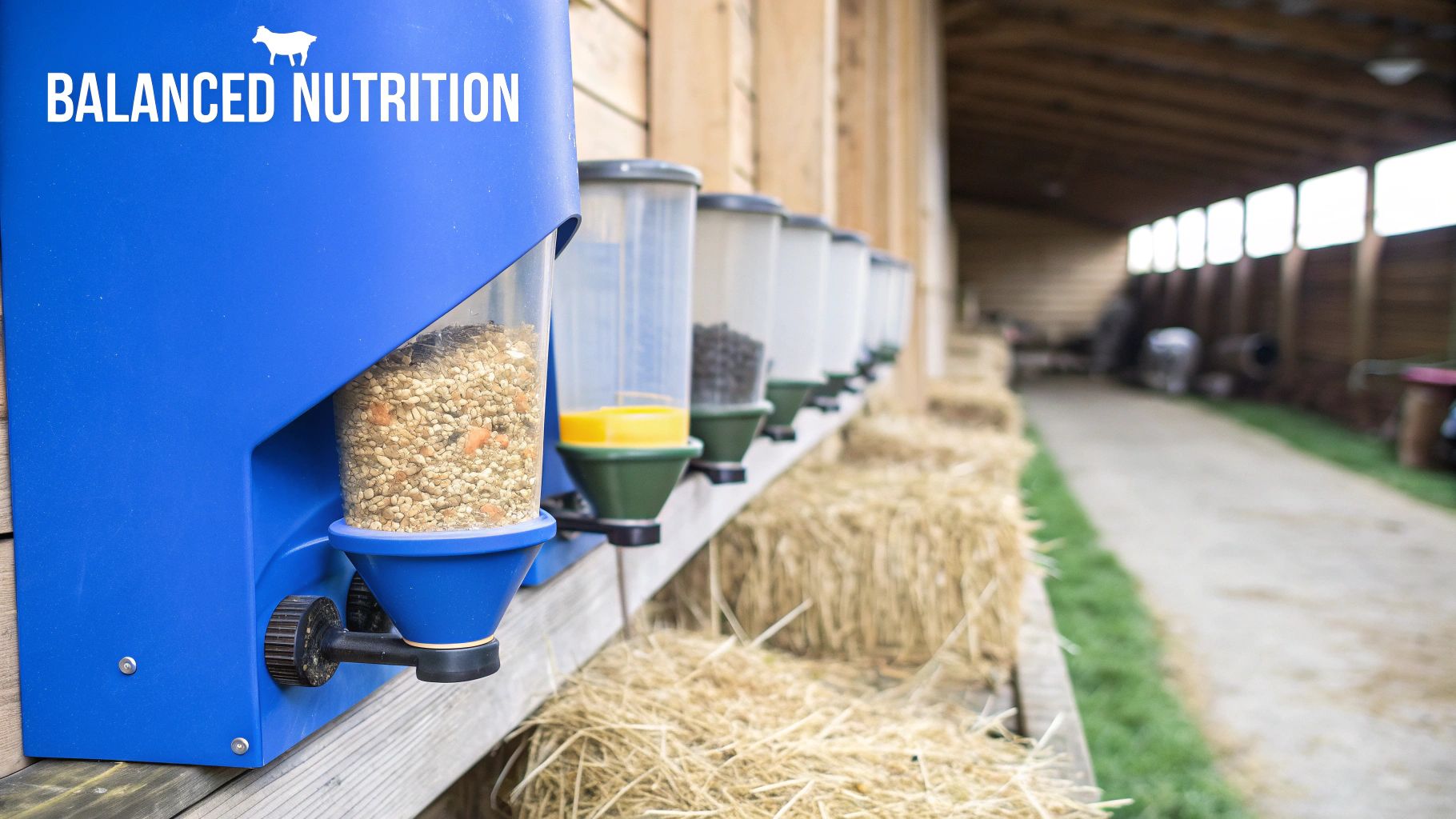
Think of poultry feed as the fuel that powers your flock’s health, growth, and even their personalities. Just like you wouldn’t put diesel in a petrol car, giving your birds the wrong type of food can lead to real problems down the line. Getting your head around their nutritional needs isn’t rocket science, but it’s easily one of the most critical parts of being a responsible poultry keeper.
Providing the right food at the right time is the very foundation of a thriving flock. It impacts everything from how quickly they grow to the strength of their eggshells. Let’s break down poultry nutrition and make it simple.
Understanding Life-Stage Feeds
A chicken’s dietary needs change dramatically as it grows from a tiny, fluffy chick into a fully-fledged adult. Thankfully, commercial feeds are expertly formulated to match these stages, which makes your job a whole lot easier. They generally come in three main varieties.
- Chick Starter: This is a high-protein feed, usually 20-24% protein, made for a chick’s first six to eight weeks. That protein hit is exactly what they need to kickstart rapid growth and develop healthy feathers, giving them the best possible start in life.
- Grower Feed: Once your birds are past that initial fragile stage, they move on to a grower feed. It contains slightly less protein (16-18%) and is designed to support steady, healthy development until they are ready to start laying, which is typically around 18-20 weeks old.
- Layer Feed: When your hens start laying their first eggs, it’s time to switch to a layer feed. The protein level is similar to grower feed, but it has one crucial difference: significantly more calcium. This is non-negotiable for producing strong, healthy eggshells day after day.
Feeding the wrong formula at the wrong stage can have serious consequences. For instance, giving high-calcium layer feed to young, non-laying birds can cause kidney damage. On the flip side, not giving it to laying hens will lead to weak, brittle eggshells and can even compromise the hen’s own bone health as her body leaches calcium to form the egg.
The Building Blocks of Poultry Nutrition
Beyond the main life-stage formulas, a couple of other dietary extras play a huge part in your flock’s digestive health.
Grit: Chickens don’t have teeth. Instead, they use a tough muscular organ called a gizzard to grind up their food. To do this properly, they need to swallow tiny stones or coarse sand, known as grit. If your flock is free-ranging, they’ll probably find enough on their own. But if they’re kept in a coop and run, you must provide a small container of commercial poultry grit for them at all times.
Oyster Shell: While layer feed contains plenty of calcium, some highly productive hens might still need an extra boost to keep up. Leaving a separate dish of crushed oyster shell allows them to top up their calcium intake whenever they feel the need, ensuring their bodies have all the resources required for top-quality egg production.
Just as chickens have specific dietary needs through their lives, other types of poultry also require unique nutrition right from day one. If you’re looking to raise smaller birds, understanding their feeding requirements is just as important. For those planning to expand their flock, learning how to hatch quail eggs will also introduce you to their specialised starter feeds.
Finally, and this is a big one, you must ensure your flock has constant access to fresh, clean water. A chicken drinks roughly double the weight of the feed it eats, and dehydration can stop egg production almost overnight. Investing in sturdy, easy-to-clean feeders and waterers will help prevent contamination and reduce waste, making sure your birds can get the clean, balanced diet they need to truly thrive.
Keeping Your Flock Healthy and Disease-Free
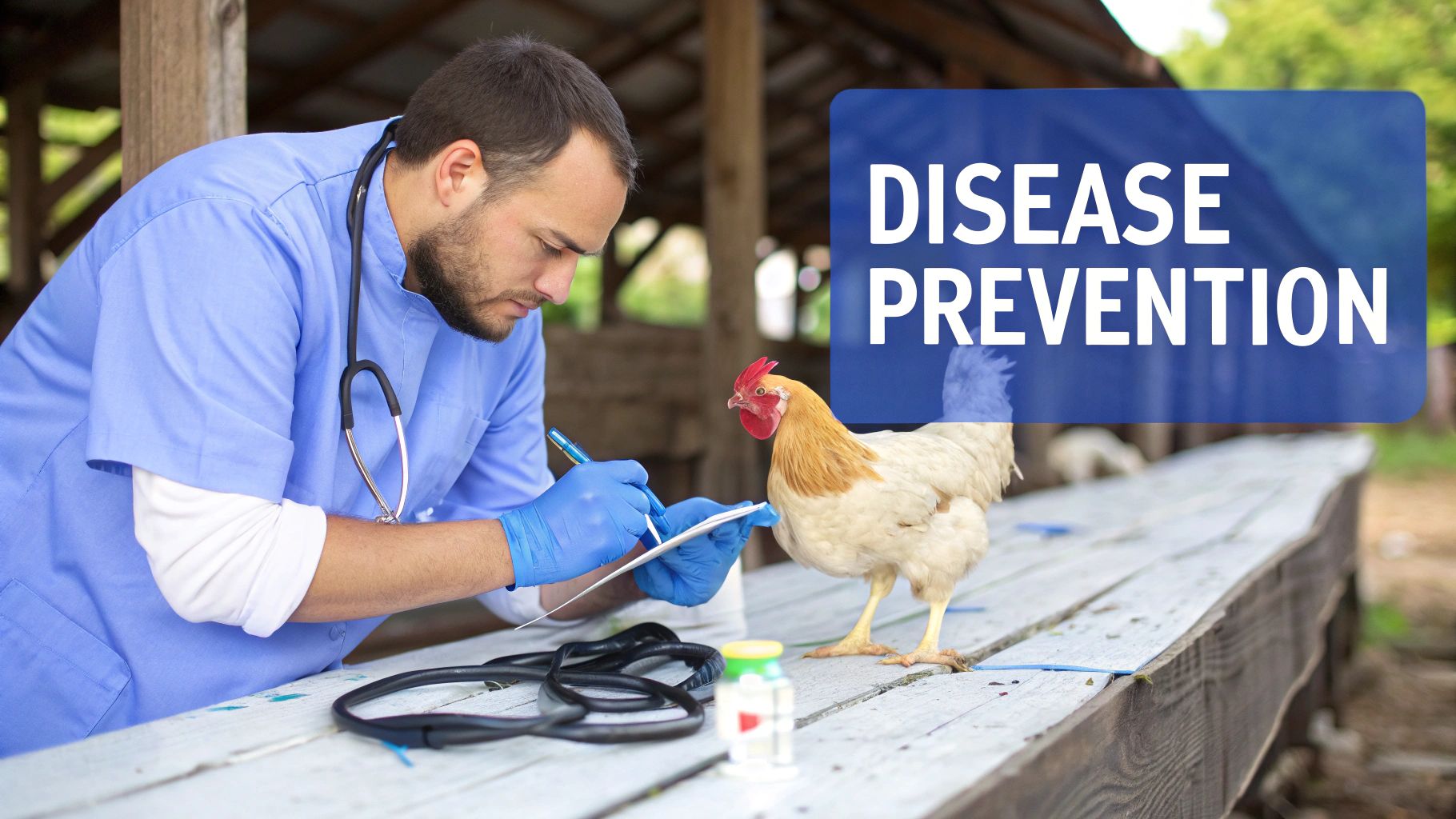
When you’re starting out with poultry, it’s far better, easier, and cheaper to prevent problems than to cure them. The best approach is to see yourself as your flock’s first line of defence. By being observant and proactive, you can head off most health issues before they ever get a chance to take hold. A healthy, happy bird is a resilient one, and a few simple habits are your most powerful allies.
The real secret is making simple, regular health checks part of your daily routine. This doesn’t have to be some formal, complicated examination. Just spending a few minutes watching your flock each day helps you learn what “normal” looks like, making it incredibly easy to spot when something isn’t quite right.
Performing Regular Health Checks
A daily check can be as simple as watching your birds while you’re putting out their feed. A healthy chicken is alert, active, and curious about what’s going on. Its eyes will be bright and clear, its feathers will look smooth and tidy, and it will move with confidence.
Keep an eye out for any bird that seems sluggish, separates itself from the others, or shows no interest in food or water. These are often the very first clues that something is amiss. It’s also a good idea to pay attention to their droppings; a sudden change in colour or consistency can be an early warning of an internal problem.
Common UK Poultry Problems
Even the best-managed flock can face challenges, and there are a few common health issues that UK poultry keepers should be aware of. Knowing what you’re looking for is the first step toward effective prevention.
- External Parasites (Mites and Lice): Red mites are a particular pain for UK keepers. They hide in the nooks and crannies of the coop during the day and come out to feed on your birds at night. Regular, thorough coop cleaning and dusting with poultry-safe powders are your best defences.
- Internal Parasites (Worms): Roundworms are a common internal parasite that can hit a bird’s growth and ability to lay eggs. Keeping their ground clean and using preventative wormers is vital. If you’re worried about worms, you can learn more about how to worm chickens in our detailed guide.
- Respiratory Infections: Damp, stuffy, and poorly ventilated coops are a breeding ground for respiratory illnesses. This is why we stress that good, draught-free ventilation isn’t just a nice-to-have—it’s absolutely essential for your flock’s health.
Biosecurity: Your Flock’s Invisible Shield
Biosecurity might sound like a complicated word, but it’s really just a set of simple practices designed to stop diseases from getting onto your property or spreading through your flock. It is the cornerstone of good poultry management. For a back garden keeper, this means creating a protective bubble around your birds with simple, consistent habits.
Implementing Basic Biosecurity Measures
You don’t need a lab coat to have good biosecurity. It all comes down to common sense rules that massively cut the risk to your flock. The single most important rule is to quarantine all new birds. Any new chickens, no matter how healthy they appear, must be kept completely separate from your flock for at least 30 days. This gives you a window to watch for any signs of illness that might have been lurking.
Another key habit is simple cleanliness. Keep your feeders and waterers scrubbed clean to stop bacteria and diseases from spreading. It’s also a great idea to have a dedicated pair of wellies or boots that you only wear in your chicken run. This one step can stop you from accidentally tracking in nasty pathogens from outside.
With the UK poultry industry now home to over a billion broiler birds a year and the rise of ‘megafarms’, the importance of biosecurity has never been clearer. It’s what prevents devastating disease outbreaks on a massive scale. That’s a lesson just as vital for the back garden keeper, protecting your birds and your peace of mind. By adopting these simple but powerful habits, you create a robust shield that gives your flock the protection it deserves.
Navigating Key UK Poultry Regulations
Before you get carried away with choosing breeds and designing the perfect coop, there are a few important UK rules to get your head around. Don’t worry, this isn’t about getting tangled up in red tape. It’s simply about being a good keeper, looking after your birds’ welfare, and keeping things friendly with the neighbours.
The good news is that for most of us with a few hens in the back garden, the rules are refreshingly simple. Let’s walk through what you need to know to keep your new hobby enjoyable and completely above board.
When You Must Register Your Flock
One of the first things to check is whether you need to register your birds. In Great Britain, it’s a legal must to register with the Department for Environment, Food & Rural Affairs (DEFRA) if you keep 50 or more birds. This isn’t just for chickens; it covers ducks, geese, quail, and turkeys, too.
But even if you only plan on having a handful of hens, I’d strongly encourage you to register anyway. When there’s an outbreak of something serious like avian influenza (bird flu), DEFRA uses this register to send out crucial biosecurity alerts and advice. By registering voluntarily, you get that information sent straight to you, helping you protect your flock when it counts the most.
Registering a small flock is free, quick, and you can do it online. Think of it as joining a neighbourhood watch for poultry health—it helps keep your birds and everyone else’s safe from disease.
Keeping Your Neighbours Happy
Beyond the official government rules, it pays to think about your local environment. Most councils are perfectly happy with people keeping poultry in their gardens, but they do have to follow up on complaints about noise or smells. A rooster crowing at 4 a.m. or a mucky coop can sour relations pretty quickly.
A bit of good management is all it takes to prevent any friction:
- Noise: If you live in a built-up area, you might want to give cockerels a miss. Hens, on the other hand, are generally quiet birds.
- Smell: A clean coop doesn’t smell. Simple as that. Regular mucking out and using dry, absorbent bedding like wood shavings will stop odours from ever becoming an issue.
- Pests: Keep your chicken feed stored in sealed, rodent-proof containers. This simple step will stop you from accidentally inviting rats to the party.
Selling Your Surplus Eggs
One of the greatest perks of keeping hens is the steady supply of fresh eggs—often more than you can possibly eat yourself! Selling your extras from the garden gate is a great way to share the bounty, and it’s perfectly legal. You just need to follow a few straightforward food safety rules.
When you’re selling directly to people—like neighbours dropping by or colleagues at work—your eggs don’t need to be stamped. However, they must be clean, fresh, and safe to eat. You should also clearly display a sign or label them as “unclassified eggs” along with your name and address. This little bit of transparency gives your customers total confidence in the lovely fresh eggs they’re buying from you.
Your Top Questions Answered
Starting out in poultry farming can feel like you’re learning a whole new language. There are so many new terms and concepts to get your head around. To help you feel more confident and avoid some of those first-timer stumbles, we’ve put together answers to the questions we hear most often.
How Much Space Do I Really Need Per Chicken?
This is probably one of the most important questions you can ask. Getting it right from the start prevents a world of problems down the line, as overcrowding is a massive source of stress and illness in a flock.
As a solid rule of thumb, you’ll want to provide at least 0.3 to 0.4 square metres (3-4 sq ft) of space inside the coop for every standard-sized chicken. This gives them enough room to move, stretch their wings, and roost comfortably without being on top of each other.
For their outdoor run, the more space, the better. A good minimum to aim for is 1 square metre (10 sq ft) per bird. A generous run not only keeps bullying to a minimum but also helps keep the ground from turning into a muddy, parasite-filled mess. It gives your flock the freedom to forage and act like chickens, which is the key to happy, healthy birds.
Can I Mix Different Breeds of Chickens Together?
Absolutely! A mixed flock is a fantastic way to get a colourful egg basket and enjoy a variety of different personalities in your garden. The secret to a peaceful, integrated flock lies in how you manage them, especially when you’re introducing new birds.
It’s always a good idea to match temperaments. For instance, putting a very gentle, placid breed like an Orpington in with a flock of assertive Leghorns could lead to the gentler birds being bullied. A little research into breed personalities goes a long way.
The golden rule for adding new chickens is to quarantine every new bird for at least 30 days. This isn’t just a suggestion; it’s your single best defence against introducing disease or parasites into your established flock. Keep them in a totally separate area with their own food and water—no exceptions.
How Soon Will My Hens Start Laying Eggs?
Ah, the excitement of waiting for that very first egg! It’s one of the best moments for any new poultry keeper. For most popular layer breeds, you can expect the first eggs to appear somewhere between 18 and 22 weeks of age.
Keep in mind that this timeline can shift based on the specific breed, the time of year (daylight hours play a huge role), and how good their nutrition is.
Don’t be alarmed if the first few eggs are a bit weird. You might find tiny “fairy” eggs, eggs with soft shells, or ones that look a bit misshapen. This is completely normal as their bodies get into the rhythm of laying. With consistent access to good-quality layer feed and fresh water, they’ll soon be producing beautiful, perfect eggs for your breakfast table.
At HatchingEggs.eu, we truly believe that a great flock starts with great stock. Whether you’re looking to hatch your very first chick or add some unique breeds to your farm, we supply premium fertile eggs from our own meticulously managed breeding groups.
Start your poultry adventure with confidence by exploring our full selection at https://www.hatchingeggs.eu.