


Why Your Chickens Need Proper Worming (And What Happens When You Skip It)
Worming chickens isn’t the most glamorous part of poultry keeping, but it’s essential for their well-being, especially in the UK. Our climate and backyard setups can create a perfect breeding ground for parasites. Understanding effective worming practices is a must for any UK chicken keeper.
Common internal parasites like roundworms, hairworms, and gapeworms can significantly impact your flock’s health. These parasites drain energy and decrease egg production, leaving your hens less productive and vulnerable.
Many new chicken keepers overlook the initial signs of a worm infestation. These subtle symptoms can include slight appetite changes, fewer eggs, and barely perceptible differences in droppings.
It’s essential to regularly observe your flock and know what to look for. Seemingly small changes can indicate a much bigger problem.
The Impact of Untreated Worm Infestations
Ignoring worm infestations can have serious consequences. Untreated worms lead to significant health issues, dramatically reduced egg laying, and a weakened immune system.
This lowered immunity makes your entire flock susceptible to other illnesses. A hen struggling with a heavy worm burden might not be able to fight off a simple respiratory infection, potentially spreading it to the rest of your birds.
Backyard chicken management, including worming, is a crucial aspect of poultry care in the UK. A 2024 survey emphasized the importance of balanced care, which includes regular health checks and parasite management. Discover more insights about backyard chicken care. This study highlights the need for proactive worming strategies for healthy and thriving flocks.
Identifying the Warning Signs
Recognizing the signs of worms is the first step to safeguarding your chickens. While these signs can be subtle, careful observation will help you identify them early:
- Changes in Appetite: A reduced appetite, or a hen that seems less interested in food, could signal a worm problem.
- Drop in Egg Production: A sudden or gradual decrease in egg production can be a key indicator of worms.
- Abnormal Droppings: Watch for changes like diarrhea, blood in the stool, or unusual color or consistency.
- Lethargy: If your chickens seem less active or are resting more than usual, they might have worms.
- Pale Comb and Wattles: Healthy combs and wattles are a vibrant red. Pale or dull coloring might indicate a health problem, including a worm infestation.
By understanding these signs and implementing a consistent worming program, you can keep your flock happy, healthy, and productive. This leads to the important question of when to worm your chickens.
Perfect Timing: When Your Flock Actually Needs Treatment
Knowing when to worm your chickens is just as important as knowing how. Strategic timing can make all the difference between a healthy, productive flock and ongoing struggles with parasites. Experienced chicken keepers in the UK know the importance of seasonal changes, particularly in spring.
As temperatures increase, so do worm populations. Spring provides the ideal breeding conditions for these parasites to multiply rapidly. A rise in spring temperatures often leads to a significant increase in poultry worms, making it a crucial time for worming. Explore this topic further.
Observing Your Flock for Signs of Worms
It’s also essential to learn how to recognize subtle changes in your birds’ behavior. These can be indicators of a worm problem. These signs can be easy to miss, especially if you’re new to chicken keeping.
Lethargy: If your chickens are less active or resting more than usual, it could be a sign of worms. Healthy chickens are naturally active. Any noticeable drop in their energy levels warrants attention.
Changes in Pecking Order: Worms can sometimes disrupt the established pecking order within your flock. If a typically dominant hen becomes submissive, she might be suffering from the effects of parasites.
Changes in Appetite: A decreased appetite is another potential indicator of a worm problem. If your chickens aren’t eating as much as they normally do, it’s a good idea to investigate further.
Worming Schedules for Different Flock Types
Different flocks have different worming needs. Your worming schedule will vary depending on whether you have layers, breeding stock, or meat birds. For example, prolific layers might benefit from more frequent worming due to the stress of egg production. How to master duck incubation. Breeding stock requires careful worming strategies to ensure the health of their offspring.
Free-Ranging vs. Confined Setups
Your flock’s living arrangements also impact your worming approach. Free-ranging chickens have a higher chance of encountering parasites than confined birds. This means free-range flocks generally require a more proactive worming strategy.
Confined chickens may need less frequent treatments. However, even in confined setups, parasite problems can still occur. By understanding these factors – timing, observation, flock type, and management style – you can develop a targeted worming strategy that protects your birds and maximizes their productivity.
Navigating UK Worming Treatments Like A Pro
Choosing the right worming treatment for your chickens in the UK can be overwhelming. So many options exist! This guide will help you navigate the process, focusing on practical solutions for our specific climate and regulations. We’ll cover everything from prescription medications to over-the-counter remedies.
Understanding Different Worming Treatment Options
The first step is understanding the different types of worming treatments available. This knowledge will help you choose the best option for your flock.
Prescription Medications: These require a consultation with a vet and are often used for specific worm types. They’re highly effective but can be more expensive.
Over-the-Counter Solutions: These are readily available from agricultural suppliers and pet shops. They offer a broad-spectrum approach and are generally more affordable. Flubenvet used to be a popular choice, but recent price increases and supplier regulations have impacted its affordability. Learn more about worming treatment costs here.
Natural Alternatives: These include diatomaceous earth and certain herbal remedies. They appeal to keepers prioritizing organic practices. However, research their effectiveness thoroughly and consult with experienced keepers or vets before relying solely on them.
You might also be interested in learning more about candling: How to master candling chicken eggs.
Choosing the Right Delivery Method
After choosing a treatment type, consider the delivery method. This refers to how you administer the wormer. Each method has its advantages and disadvantages.
Water-Soluble Treatments: These are mixed into the chickens’ drinking water, ensuring each bird gets a dose. This is helpful for larger flocks. However, your chickens need to drink enough water within a specific timeframe for full effectiveness.
Feed Additives: These are mixed into the chickens’ feed, simplifying administration. This is especially convenient if you use pre-mixed feed. However, individual birds may not eat the same amount of feed, making consistent dosing difficult.
Oral Medications: These are given directly to each bird, ensuring accurate dosing. This method can be time-consuming and stressful for both you and your birds, especially with a large flock.
Dosage, Withdrawal Periods, and Sourcing Treatments
Calculating the correct dosage is crucial. Underdosing can lead to worm resistance, while overdosing can harm your birds. Always follow the manufacturer’s instructions and consult a vet if you’re unsure.
Also, understand withdrawal periods. This is the time after treatment when eggs or meat shouldn’t be consumed.
Source treatments from reputable suppliers, whether online, from a local agricultural merchant, or your veterinarian. This ensures you receive genuine, high-quality products that meet UK regulations.
The following table provides a comparison of some common worming treatments available in the UK.
UK Chicken Worming Treatments Comparison: This table compares popular worming treatments available to UK chicken keepers, including effectiveness, cost, and withdrawal periods.
| Treatment Name | Active Ingredient | Application Method | Withdrawal Period | Approximate Cost |
|---|---|---|---|---|
| Flubenvet | Flubendazole | Feed additive | 7 days (eggs) | Varies, check supplier |
| Solubenol | Flubendazole | Water soluble | 7 days (eggs) | Varies, check supplier |
| Ivermectin | Ivermectin | Oral or injectable | Varies depending on formulation; consult vet for egg/meat withdrawal. | Varies, prescription required |
This table highlights the key differences between several worming treatments. Be sure to consult with a veterinarian for specific recommendations for your flock. By understanding dosage, withdrawal periods, and reputable sourcing, you can keep your flock healthy and productive.
Smart Testing: Why Modern Keepers Test Before They Treat
Forget routinely deworming your chickens. Today’s poultry keepers understand the value of targeted testing. This method saves money, reduces unnecessary medication, and promotes responsible parasite control. It’s about understanding your flock’s health before taking action.
Collecting Samples Without Stress
Effective sample collection is the first step in smart testing. This process is easy and doesn’t have to be stressful for you or your hens. It simply involves gathering fresh droppings from the coop floor.
Clean the Coop: Begin with a clean coop. The night before collecting, remove old bedding and droppings. This ensures you gather fresh samples in the morning.
Gather Droppings: Collect several fresh droppings from various spots in the coop the following morning. A combined sample from multiple birds provides a comprehensive view of your flock’s health.
Store the Sample: Place the droppings in a sealed container or bag.
This simple procedure provides the sample needed for accurate analysis.
Interpreting Test Results and Making Decisions
After collecting your sample, submit it to a vet or a specialized laboratory like a veterinary diagnostic lab. They will analyze the sample for worm eggs and provide you with a worm egg count. Understanding these results is key to making informed treatment decisions.
A high worm egg count indicates a significant worm burden and necessitates treatment. A low count, however, doesn’t guarantee your flock is entirely worm-free. It simply means the egg count is below the detectable limit. Warmer temperatures, especially in spring, create ideal breeding conditions for worms, potentially leading to population spikes. Worm count kits have become readily available, empowering keepers to test before treating. These kits can be purchased online, for example on Amazon UK, for around £14, making them affordable for backyard flocks. Learn more about springtime worming.
When to Test and When to Act Immediately
Regular monitoring is vital for successful flock management. Many experienced keepers test their flocks every 3-6 months, or more often if a problem is suspected. You might also be interested in learning more about chicken egg development. However, if your chickens exhibit clear signs of illness, such as significant weight loss, lethargy, or bloody droppings, consult a vet immediately. Don’t wait for test results in these cases; prompt treatment is critical.
The Benefits of Smart Testing
This proactive, data-driven approach to worming is now the standard among experienced poultry keepers. It allows for targeted treatment, minimizing medication use and the risk of worm resistance. By testing before treating, you prioritize your birds’ health and responsible medication practices. This targeted approach, combined with regular coop cleaning, keeps your flock healthy and productive.
Your Complete Step-By-Step Worming Process
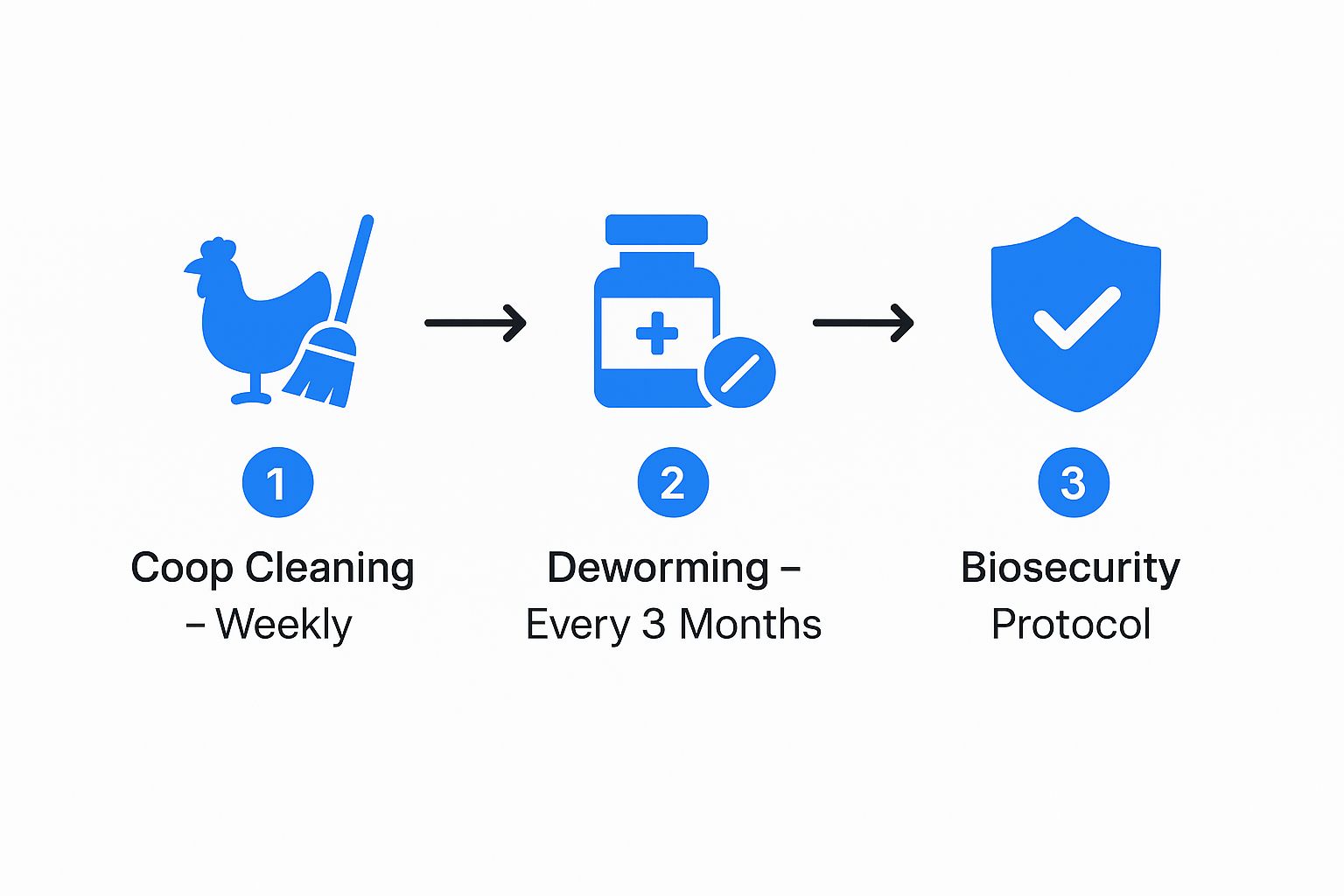
The infographic above provides a visual guide to the three essential steps for maintaining your chickens’ health: weekly coop cleaning, worming every three months, and consistent biosecurity. These practices work together to create a healthy environment and minimize worm infestations. By following this cycle, you’ll significantly reduce the risk of parasites and help your flock thrive.
Essential Preparation and Dosage Calculation
Before worming your chickens, proper preparation is essential for a smooth and effective process. Begin by accurately weighing your birds. This ensures the correct dosage of worming treatment, preventing underdosing, which can lead to resistance, or overdosing, which can be harmful. Next, gather all necessary equipment, including gloves, syringes (if needed), and the worming treatment. Having everything readily available makes the process quicker and less stressful for your birds.
Administering the Treatment
Choosing the right administration method is key for effective worming. Water-soluble treatments are a popular option, allowing birds to receive their dose through their drinking water. Ensure your chickens consume enough medicated water within the recommended timeframe. Feed additives are another option, mixed directly into the feed. This simplifies administration, but monitor your birds’ feed intake to guarantee the correct dosage. Individual oral administration is also an option, ensuring accurate dosing but potentially more time-consuming and stressful.
Post-Treatment and Recovery
After worming, monitor your flock for any unusual behavior or adverse reactions, such as lethargy or appetite changes. While rare, these reactions can occur. Adhere to the withdrawal period, the time after treatment during which eggs and meat are unsafe for consumption. This period varies depending on the specific worming treatment, so always check the product label. You may also find this article helpful: How to master chicken egg incubation temperature.
Safety Considerations, Storage, and Disposal
Safe handling and proper disposal of worming medications are critical. Always wear gloves when handling and administering treatments. Store unused medication in its original container, out of reach of children and pets, in a cool, dry location. Dispose of used or expired medication according to local regulations. Contact your veterinarian or pharmacist for guidance if needed.
Record-Keeping Best Practices
Keeping detailed records of your worming treatments is essential for long-term flock management. Record the treatment date, product used, dosage given, and any observations about your flock’s health. These records help track worming schedules, assess treatment effectiveness, and identify potential problems early. This information will become invaluable for making informed decisions about your flock’s health, allowing you to refine your worming strategy and maintain a healthy and productive flock.
Understanding UK Poultry Health In The Bigger Picture
Your backyard flock isn’t isolated. It’s a small, yet important, piece of the larger UK poultry scene. Understanding this bigger picture helps you make informed choices about your chickens’ health, especially regarding worming. Let’s look at how commercial poultry operations handle parasites and what you can learn from them for your own flock. Interested in hatching your own chicks? Check out this helpful guide: How to master hatching eggs.
Commercial vs. Backyard Worming Practices
Commercial poultry farms operate on a massive scale. Their focus is on prevention to protect their investment. They know treating diseases is much more expensive than preventing them. This principle is just as important for backyard flocks. Investing in preventative worming is a smart, budget-friendly way to ensure long-term flock health.
The UK poultry industry is a major player in our agricultural landscape. Just in June 2024, UK hatcheries set over 103 million eggs for commercial broilers. This shows the sheer scale of chicken production and the potential impact of parasites. Find more detailed statistics here. Effective worming is absolutely critical to keeping these large flocks healthy and productive.
The following table provides a snapshot of UK poultry production and highlights the importance of health management.
UK Poultry Production Statistics
Key statistics showing the scale of UK poultry production and the importance of health management practices
| Category | Annual Production (estimated) | Health Management Priority | Economic Impact |
|---|---|---|---|
| Broiler Chickens | Over 1 billion birds | Parasite control, disease prevention | Billions of pounds annually |
| Laying Hens | Hundreds of millions of birds | Egg quality, disease management | Significant contribution to food supply |
| Breeding Stock | Millions of birds | Genetic health, biosecurity | Foundation of the entire industry |
This data illustrates how vital health management is to the economic viability of the UK poultry sector. Effective strategies protect not only individual birds but the entire industry.
Regulatory Changes and Future Treatments
UK regulations around poultry medications are always changing. This impacts which products are available to backyard keepers. Staying informed about these changes ensures you can access suitable and legal worming treatments.
Industry advancements also shape future treatment options. Ongoing research and development continually improve worming medications, offering more effective and targeted solutions for parasite control.
Learning From Industry Research
The UK’s large poultry sector invests significantly in research to combat parasite resistance and develop better management practices. This research benefits backyard keepers, too. By staying up-to-date on industry best practices, you can adapt these strategies for your own flock. This helps keep your birds healthy and prepared for emerging challenges.
By understanding how poultry health is connected across the UK – from large commercial operations to your backyard – you can make the best decisions for your flock’s well-being. This broader view helps you choose the right treatments, implement effective prevention strategies, and maintain a healthy, productive flock.
Key Takeaways
Keeping your chickens healthy and productive means staying ahead of worm infestations. This guide summarizes key strategies for effective worm control in your flock. Put these takeaways into practice, and you’ll see a noticeable improvement in your chickens’ health.
Recognizing the Signs and Acting Quickly
Early detection is the key to managing worms effectively. Regularly observe your flock for these common signs of a potential worm problem:
- Changes in Appetite: A sudden decrease in food consumption.
- Drop in Egg Production: Noticeably fewer eggs than usual.
- Abnormal Droppings: Changes in consistency, color, the presence of blood, or diarrhea.
- Lethargy: Less activity, more resting, and a general lack of energy.
- Pale Comb and Wattles: A loss of the usual bright red color.
If you spot any of these signs, consider having your flock tested for worms by a veterinarian to confirm the diagnosis before starting treatment.
Choosing and Administering Worming Treatments
Selecting the right worming treatment can seem daunting with so many options available. Here’s what to consider:
- Prescription vs. Over-the-Counter: Talk to your vet for tailored recommendations.
- Delivery Method: Water-soluble, feed additive, or oral administration. Select the method that best suits your flock’s needs and your management style.
- Dosage: Calculating the correct dosage is critical. Underdosing can lead to worm resistance, while overdosing can harm your birds.
- Withdrawal Period: Strictly follow the recommended withdrawal period to ensure the safety of your eggs and meat for consumption.
Always purchase treatments from reputable suppliers in the UK.
Smart Testing: A Modern Approach
Testing your flock for worms before treating is becoming the standard of care. Collect fresh droppings and submit them to your vet or a laboratory for analysis. The results of the worm egg count will guide your treatment decisions. Regular monitoring is essential for prevention, but if your chickens show severe symptoms, act quickly.
Building a Support Network
Connect with local veterinarians and other chicken keepers in the UK. They can offer valuable advice and support, creating a network of shared knowledge. Sharing experiences and information will boost your confidence and prepare you for any flock health challenge.
Preventative Measures for Long-Term Health
Regular coop cleaning is your first line of defense against worm infestations. A clean environment helps discourage worms from thriving. Maintain consistent biosecurity practices to further protect your flock by minimizing the introduction of parasites. Hatch your dreams with healthy chicks from HatchingEggs.eu! Their premium hatching eggs and expert guidance can help you start or expand your flock with confidence.